Showing posts with label j-school. Show all posts

Wednesday, August 31, 2011

Jobs you'll have as an editor.

The job title and role of "editor" often means much more than its literal definition.

A list of jobs you might have while you're editing a publication:
  • Intern
  • Writer
  • Reporter
  • Copy Editor
  • Assignment Editor
  • Photo Editor
  • Special Projects Editor
  • Researcher
  • Administrative assistant
  • Sales account executive
  • Product manager
  • UX designer
  • Creative director
  • Customer support specialist
  • "Evangelist"
  • Marketer
  • Communications director
  • Audience acquisition specialist
  • Social media coordinator
  • Event planner
Call it a different kind of journalism (perhaps publishing) education. But when you're responsible for keeping your ad pages (or pageviews, or unique users) up, you'll find yourself wearing more and more caps in an effort to meet your goals.

Monday, April 20, 2009

New media reality check: The skills you really need in the real world

I've had several people e-mail me with the following question:

"I'm a print/magazine/broadcast student, but I want to get into new media. What courses should I take/which j-school should I go to/how should I prepare so that I can get a job when I graduate? You were a new media student, Ed. Tell me -- how can I get hired?"

If you were wondering the same thing, you're not alone. As the economy tanks and media outlets of all persuasions cut back, lay off or refuse to hire, I'd be nervous, too. (And I was.) Everyone and their mother is telling you that you need new media skills to compete.

You must be a one-man-band of multimedia glory, they say. You simply aren't a journalist unless you're carrying a laptop, camera, camcorder, pen and pad all at once!

Shaking in your boots yet? You ought to be. Because there are very few people that can do that job.

The good news is that it probably won't be you. As new media has increased in popularity and usage, this myth has populated of the multi-talented reporter -- you know, the one carrying all the gear a few paragraphs back. And while it's certainly an ideal, it's not a necessity. In fact, it's barely a reality.

Thus brings my first point of this New Media Reality Check: most news organizations simply don't operate that way.

Do you remember how Henry Ford became famous? He did it with the Model-T, which was innovative because it was built on an assembly line. So instead of one worker needing to know how to put together an automobile from start to finish, workers were trained to be very good at one specific thing -- putting on a wheel, or attaching a transmission to an engine, or checking for defects. It made the process more efficient in both cost and speed.

The same thing applies to publications, moreso as it gets bigger. Whether the publication in question is a newspaper or a magazine or a radio/TV station or a website, the assembly line theory of the Industrial Age still holds true: a writer reports and creates the story, an editor edits it, a photographer shoots art for it, a production editor lays out a template for the story to appear and another editor (or two) looks at the entire package, all while being fact-checked and copy-edited by another person dedicated to that task.

As you can see, no one person does it all -- the photographer sticks to his or her camera, the reporter sticks to his or her story and the production editor doesn't typically interject his or her opinion about the reportage. Each person is a cog in the machine -- the bigger the machine, the more cogs, and vice-versa.

So how did we come to expect a journalist to do the same thing?

The reality is that, in most newsgathering organizations, you will have a specialized task. Maybe you'll be an interactive producer, spending your days working with Adobe Flash (in which case, you probably have a computer science degree.) Maybe you'll spend your days producing slideshows and simple infographics. Maybe you'll blog. But you'll rarely do them all.

So here is my second point of the New Media Reality Check -- my advice to journalists looking to get in on the new media game:

If you're just starting out j-school or a similar educational program, think about what you'd like to do when you graduate. Do you want to work in broadcast television? Do you want to work online? Do you want to work in print? Radio? Whatever it is you think you want to do, pursue the skills needed for that field within your studies. It's that simple. If you want to dabble in other skills, that's fine. But you don't have to as an online journalism prerequisite.

If you're already a journalist, or you're in a print-specific educational track (newspaper, magazine, etc.), consider where you want to end up, job-wise. Do you want to be a photo/video journalist or interactive producer? Then you'll have to attain specific skills, via a proper class or a dedicated friend (or yourself, if you have time). Do you want to simply be able to write online and be comfortable with the Web? Good news -- my advice to you is the following: Don't return to j-school, and don't take a course.

That's right. Instead, start a blog. (You can do so here or here, among other places.)

A blog isn't a diary anymore. It's parlance for a type of publishing platform -- you now have the very machinations of a publication at your fingertips, for free. Once you start one, start playing around in the HTML editor of each post. Start reading about CSS once you've got a handle on HTML and its code snippets called "tags." And post about something on your beat. Or journalism. It doesn't matter.

That's it! You now know everything needed to work online. Seriously.

For most online journalism, all you need to know is how to blog and how to use a CMS, or content management system. That's it. What does that entail, exactly? Allow me to lay it out for you:

How to blog
Know how to write a story in Microsoft Word or on paper? Great! That's 90 percent of what you need to know to blog. Seriously. If you can write with clarity and an engaging demeanor on first draft -- which I believe is the skill to have in 21st century journalism -- you're already ahead of most people.

What about the last 10 percent? Well, the first 5 percent is learning basic HTML. For example, the little pieces of code, or tags, that allow you to bold and italicize and insert an image (which you may have to size appropriately). You may be able to do this using a "visual editor," which doesn't show tags, but you should learn how they work. That five-minute lesson will save you when something goes awry as you write.

The last 5 percent? Getting over the mental hurdle of hitting the "publish" button. Some publications have bloggers who are edited; others don't. And it has nothing to do with how big or prominent the publication is, either. So whether you're writing a column or a piece of investigative reporting, there's a good chance you'll have to publish it yourself, live to the website. All it takes is pressing "publish," but you'd be surprised how many journalists don't realize that they have that power at their fingertips -- and even more surprised at how many refuse to use it.

How to use a CMS (content management system)
This is actually a trick question. The thing is, CMSes are proprietary -- meaning they vary from publication to publication. Many larger publications have their own customized CMS. Some combine a CMS with a blog publishing platform! (You'd be surprised at how many sites/outlets are in this group.)

In other words, there's no way you can learn something that only applies to a single publication. And neither can online journalists who work elsewhere! If you, esteemed print journalist, and I, online journalism fan, both apply for the same job, we're pretty much in the same boat when it comes to that publication's CMS.

So what should you do? You started that blog I told you to sign up for above, right? Good -- a blog is a kind of CMS, so by filling out the "headline" and the "tags" and other fields, you were doing the exact same thing you would do in a CMS. Really!

Congratulations. You're an online journalist!

Pretty easy, huh? Notice I didn't mention anything about splicing video in Final Cut Pro or Avid, or mixing audio in Pro Tools or Audacity, or using Adobe Flash. Perhaps you'll use Photoshop, but likely only to resize images.

That. Is. It.

Allow me to repeat: you will not use any of these expensive, complex tools for the majority of online journalism jobs. You may down the line, but it's exceedingly rare that anyone will expect you to have prior knowledge of any of those skills.

I spent much of my "new media" journalism time playing with Adobe Flash and Final Cut Pro. The thing is, I didn't take a job doing interactive or video production -- so believe it or not, I haven't cracked either program since I finished my formal education. None of it truly had any bearing on my job prospects, and by the time I'm shopping around for my next job, I'll be so many years out of the loop that I won't be able to rely on those skills if I decide to switch.

I'll be honest, I did enjoy playing with those programs late into the night, because I learned a lot about myself and how I learn things. But I didn't need them to work online, which I currently do full-time (as in, when the Internet is out, I cannot work).

What I do wish is that I had spent more time learning lower-hanging skill fruit -- CSS, which is a coding language similar to HTML, and formal design and layout classes, because I'd like to produce my own online publication beyond The Ed. CSS and design skills are far less specific, and much more widespread in their use (and helpful in their implementation), than Adobe Flash or Final Cut Pro (for the typical online journalist). Period.

So: you wanna be an online journalist? If you haven't started yet, plan accordingly. If you have, skip the formal classes and start a blog. Then stop calling yourself a print journalist -- because we're all online journalists now.

Wednesday, March 11, 2009

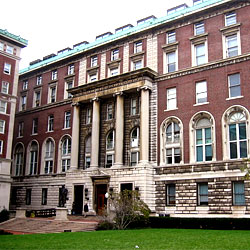
A word about Columbia J-School's 'Existential Crisis'

Former New York Sun editor Erica Orden wrote an interesting post today on New York magazine's Daily Intel blog entitled "Columbia J-School’s Existential Crisis," detailing the difficulties that the school is having adjusting to what it calls a "new media mindset."

Orden writes:

The media bloodbath hasn’t made for happy days at Columbia Journalism School. When the Times recently announced that its new, hyperlocal blog experiment “The Local” would be assisted by journalism students not from Columbia but from the City University of New York, you could practically hear the collective gasp echoing in the hallowed halls uptown. CUNY? Since when does CUNY trump Columbia? Well, since digital journalism became the single ray of hope on an otherwise dark media horizon, and Columbia’s vaunted ability to train students as print reporters began to appear obsolete. And so the school is trying to change. Fast.
To back up that statement, Orden notes the arrival of Bill Grueskin, former managing editor of WSJ.com, and the upcoming change in curriculum to focus more on digital endeavors -- which has, according to Orden, "raised the ire of some professors, particularly those closely tied to Columbia’s crown jewel, RW1."

“Fuck new media,” the coordinator of the RW1 program, Ari Goldman, said to his RW1 students on their first day of class, according to one student. Goldman, a former Times reporter and sixteen-year veteran RW1 professor, described new-media training as “playing with toys,” according to another student, and characterized the digital movement as “an experimentation in gadgetry.”

Orden goes on, accurately and with great detail, as to the "zero-sum" struggle of new media vs. old media resources; of hiring professors who know the former better than the latter and training those who know the latter and not the former.

Orden details the struggle at Columbia deftly:

Part of the problem is the perception that the situation is a “a zero-sum game,” as one person put it, where adding lessons in video production or law for bloggers will dilute or displace the school’s long-heralded focus on journalism’s core precepts: concise prose, ethical reporting, and sophisticated editorial sensibilities.

But the hurdles are practical as well as philosophical. Because many of the tenured professors haven’t worked in new media themselves, their classes require the addition of tech-savvy adjuncts, which has Lemann worried about “blowing out the budget.”

Orden wraps up the story with a sentiment I think all of us can agree on: that the real issue isn’t whether j-schools can afford to change, but that they can’t afford not to.

I believe this article reveals, faithfully, the administrative and honest struggle that journalism schools are having coping with a sudden rush of new media. The temptation to "dive in" headfirst without figuring out how to apply it, or without looking at return on investment for new storytelling methods. The struggle to convince "old media" journalism professors that new media is worthwhile, and vice-versa. 

It's a game of politics, but I think everyone is equally concerned for the same reasons: j-schools must continue cranking out the best journalists. But how?

I believe this article is framed incorrectly, however. The meat of the article is accurate, but the lede and the style used to make the point is misleading.

I've written before about my experience in the new media program at Columbia, and I mean in no way to be an apologist or defender of Orden's claims about the school. But I feel the obligation to clarify some of her inferences about and references to the school using the reality I experienced there.

  • The CUNY vs. Columbia "slight" in the lede is a creative way to play off Columbia's establishment position as the training ground for the New York Times, but Orden infers, without directly saying so, that Columbia has suddenly snapped out of its print mindset to catch up to the new media forerunners. 

    That's simply not true. The new media program has existed at Columbia, albeit in a much smaller form, since the 1990s. Much of its development is thanks to chief new media evangelist (and dean of students) Sree Sreenivasan, who has taught at the school since 1993. The program has evolved over time with the technology it covers, and has in recent years seen a noticeable bump in students who apply for the "new media" program. So it seems to me that the program has changed to address student demands, rather than trends in journalism directly.

  • Secondly, Orden credits Grueskin with that change, who arrived on June 4, 2008. I don't know firsthand just how much Grueskin has contributed behind the scenes. What I can say, however, is that the curriculum change for new media students was in the works long before he arrived, because Sreenivasan showed us a working draft of it sometime late that spring. 

  • As for RW1 -- Columbia's core reporting class, the nuts and bolts course -- Columbia "webified" the course for the first time for the school year 2007-2008, adding a content management system so that students could post their stories. Many of the difficulties Orden details about convincing old-time professors certainly do exist. However, Orden singles out one professor as an example of the skepticism -- and I must take issue with that. 

    I had the pleasure of taking a course from the professor that was singled out, and we produced a fine website for the class. In no way was my imagination limited by the professor with regard to that site. It's true that several professors at Columbia are new media tone deaf. And why should they be anything different? Some of them, particularly those of an advanced age, don't have a perceived need to be trained in new media. But that's not to say they aren't receptive to using it, even if they don't understand how to do it. 

    What's more, to debunk one of my own points, some of the oldest professors at Columbia are actively involved in the new media program. And I think that shows a lot of heart and willingness to learn, if nothing more.

  • Finally -- and most notably for Orden's lede -- the new media coordinator that she quotes was, prior to taking a full-time position at Columbia this past May, a new media adjunct at both CUNY Graduate School of Journalism and Columbia. For someone trying to start a new media war in her lede, that's a serious omission -- as are the other adjuncts who pull double-duty at both schools.

But Orden knows that -- she graduated from Columbia's j-school in 2006.

Still, I think the takeaway from Orden's post is far more valuable than the clarification I attempted to provide above. In every journalism school -- like as in every printed publication -- there's a generational, fight-or-flight, ROI-questioning debate about the place and weight with which we should approach new media and the storytelling techniques it provides. 

And for that reason, I believe we're all in this together -- it's not at all a race to be the "new media" king. Especially if the publications at the bleeding edge of adopting new media prefer computer science grads to journalism grads

Among j-school grads, I believe there's a kinship, a knowing bond that has developed from being in the experimental incubator together -- be it in New York, Missouri, California or Illinois (or Arizona, or Ohio, or...). From what I've seen, no one knows the answer to the great "new media" question -- especially j-schools. That's because the publications the schools are supposed to prepare their students for don't know, either. 

I don't want to appear as though I look through rosy lenses -- I have my criticisms of the journalism programs I have graduated from. But they seem to be far more prepared to handle the change than most of the publications I've worked for.

The policy is that there is no policy. As a journalist, I think that's wildly exciting.

UPDATE: Via Twitter, NYU's Jay Rosen directed me toward these meeting minutes from an NYU journalism school think session. It's a revealing look into what journalism educators are grappling with at this moment.

Monday, October 13, 2008

Philly Inquirer Tosses Paid Internships, Asks J-Schools to Foot Bill

Yep, you read the headline correctly: the Philadelphia Inquirer says it can't pay the wages of the handful of interns from which the paper happily accepts work:

"The Inquirer has decided it can no longer afford to pay interns–but union contracts also don’t allow the newspaper to let interns work without being paid.

The Inquirer now is asking journalism schools to pay the newspaper a stipend to support the internships. Each school that agrees to do so will have one guaranteed internship."

"UNC’s School of Journalism and Mass Communication won’t be participating in the Inquirer’s program."

To which j-schools are responding, "thanks, but no thanks. We'll take our impoverished graduates elsewhere, thank you." Journalists 1, Philadelphia Inquirer 0.

Monday, September 08, 2008

Hard Copies of Newspapers, and the State of Journalism at NYU.

Is New York University behind the times in journalism education?

NYU student Alana Taylor made journalism news headlines last week with an interesting missive on PBS MediaShift about the journalism program at the university, once referred to merely as the "Department of Journalism" at NYU and now branded as the "Arthur L. Carter Journalism Institute" at NYU (with revamped curriculum to match), by stating that, in so many words, the NYU journalism curriculum doesn't serve the new media needs of a Generation Y student.

An undergraduate at NYU, Taylor blasts the paper-only mindset of the school, lamenting that she has to bring a hard copy of the New York Times with her to class, among other old-media, MSM things. The reaction around the journalistic blogosphere, acute and forceful, turned the barrel back on her for complaining. "You are wrong," "back to the NY Times," "learn how to write news" and "take some classes" were among the responses, criticizing her for being critical and generally missing her point entirely.

Well, this whole thing is not about her. It's about NYU.

A card-carrying Gen-Y'er, I found my love for journalism at NYU as an undergraduate, like Taylor. But when I attended, the curriculum was ad hoc at best, lenient and directionless with no ultimate goal. Had I not joined the school paper, the Washington Square News, I would never have been able to truly flex my journalistic muscle -- albeit in the old-style way, as in hard news -- nor befriend people on the same path, since the NYU journalism department was one of the largest majors at the university while I attended. My classes generally did not account for the computer as anything more than a tool for research. To most, it was not a publishing platform.

But, as evidenced in Taylor's description, NYU journalism is much better off than when I attended just two years ago. Yet it's clearly still not up to par.

Like Taylor, I'm new media-inclined, and I, too, blogged and "plugged in" as part of my journalistic experience there, mostly outside of class. I, too, complained about bringing a hard copy of the Times to class, because I read it online.

So, with all the "convergent" changes NYU has made, it is a valuable critique that the department's -- sorry, institute's -- new media instruction pales to the competition. Sure, Taylor is an undergraduate, and that group in particular receives far less specific training than the graduate level.

But when I attended NYU, the only new media class I took was called, amusingly, "digital journalism" -- and it was a blog-focused affair that looked at the ethics, practices, writing style and issues of online news and opinion taught by the affable Patrick Phillips, of I Want Media (another was taught by the media storm of a man that is Jay Rosen). And this was all in 2006.

So, in two years -- light years for the Internet, and just look at any webpage from 2006 to see it -- NYU's new media outlook hasn't changed that much. It's lamentable.

I was lucky enough to attend Columbia's Graduate School of Journalism after NYU, for new media. And one of the reasons I attended was to do everything I wasn't able to only had a taste of as an undergraduate at NYU. Video, audio, interactive design, blogging -- that was something I used to do in my spare time. At Columbia, I did it for my degree. At NYU, it was a grand experiment in an entire class blogging.

NYU's undergraduates either study "general and investigative reporting" or "media criticism," and graduates study one of 10 subject-related fields. Columbia's M.S. graduates study "print," "broadcast," "magazine" or "new media," and it's M.A. graduates delve into the subject-specific matter.

I don't intend to compare NYU's undergraduate curriculum with Columbia's graduate instruction as apples-to-apples. I merely want to show how radically different an experience can be in just one year's time, from one school to the next. How different an approach to journalism education can be with regard to categories.

Categories or not, Taylor's taking to the challenge by learning on her own, like I did. Good for her, I say. She knows she's ahead of the curve anyway, and she's getting an education by learning what she doesn't like.

So why is NYU behind? Allow me to posture. From what I've seen as a student, lots of staff changes in recent years, with a revamped curriculum (undergrad and grad) and a new building entirely. NYU's journalism school is a department within the greater College of Arts and Science, so it does not have the dedicated resources that it would if it were a separate school, instead bureaucratic red tape and a lack of funds. The department's never had much of an identity (a "department" is now "the institute," which helps greatly) and, given its size, hardly any community at all, with a serious lack of alumni relations (and I mean no disservice to the single alumni coordinator).

I was speaking with a former editor-in-chief of WSN, and we agreed that, had we not joined the paper, which is (was) not promoted by the department at all, we would never have made journalism student friends. Which is hard to believe, since j-students are a tight-knit, give-a-helping-hand group of professionals. When I simultaneously created NYU and Columbia journalism groups on LinkedIn, the popular networking site, the "join rate" of Columbia's dwarfed NYU's, even though Columbia is a much smaller program and lacks undergraduates entirely. (To date, Columbia's has 130 members, while NYU's a paltry 24).

The reason I say all this is because NYU's journalism program is in the midst of profound change -- much like the kind of change newspapers are going through all over the country, one of identity and mission. The department is turning a corner, slowly, but it remains to be seen if Taylor's concerns about new media are a part of the new direction of the department. Perhaps there is no reliable system of feedback for its own, many, graduates. Sure, NYU now has great new facilities for such instruction, but is it actually a part of the practical, bootstrap, nuts-and-bolts instruction? Apparently not, according to Taylor. And that's a real shame, because there exists few journalists in this world that don't have digital copies of their clips these days.

I don't fault anyone for not knowing Mashable -- as popular as it is, it's easy to miss. But to not account for a journalism student's desire to eventually write for the web -- and not a paper, or magazine, etc. -- that's bad news in my book.

Oh, and you know what, Alana? In all my time at NYU and Columbia, I've only read a paper New York Times twice (I read it several times a day online). Both times, NYU professors were "to blame." But I'm happy I had to, just those couple of times. It's easy to forget how some people read the news.

But there's a vice-versa to that, too.

(Much thanks to Lam Vo and Simon Owens at Bloggasm for the heads-up on this.)

Monday, August 25, 2008

Cronkite J-School Enters 'Bar Room Brawl' With Medill, Columbia, Missouri

I recently read an interesting article about the kickoff for Arizona State University's Cronkite School of Journalism and Mass Communications [sic], which is apparently aiming for the "Top Five" j-schools in the country:

To journalists, the names are familiar: Medill, at Northwestern . . . Missouri . . . Columbia . . . Syracuse . . . Scripps, at Ohio University.

These schools and one or two others long have constituted the benchmarks for journalism education in the Unite States. Get accepted at one of these demanding institutions and you can count on a cutting-edge education in modern American journalism.

Now, the Walter Cronkite School of Journalism and Mass Communications at Arizona State University seeks entry into the club. And its advocates are not shy about saying so.


Some interesting things come from this. First, Arizona Republic writer Doug MacEachern explicitly defines the Top 5 j-schools -- the top stratum, really -- as Columbia, Medill, Missouri, Scripps and Syracuse, in alphabetical order. (No word on where, if any, MacEachern went to school.)

Even more interesting is his willingness to draw differentiating lines between the programs:

For good reason, Columbia and Scripps are perceived as incubators of writing technique. Syracuse is a great "reporter's school." And Medill and Missouri are renowned for graduate programs that have produced many (if not most) of the nation's top news editors.

I'm not sure how accurate these are -- we'd probably have to convene a panel of experts to get to the truth, and some of these overlap -- but it's probably the first time that I've ever seen such distinction drawn in print. (...ironically.)

So, then, what will Cronkite be known for? It's not clear at this point. But as I mentioned before, we could use some j-school rankings to figure it all out. Or at least know that journalism can thrive in dusty Arizona.

P.S. - What happened to UC Berkeley j-school?

Tuesday, June 17, 2008

Is J-School Worth It? (The Answer May Surprise You)

The most recurring question asked of me in the last month since I graduated from the Columbia University Graduate School of Journalism is simply: "Was it worth it?"

It's a great question to ask, because there are so many conflicting statements out there, especially on the Web.

For example:

Will j-school eat your brain? ("J-school ate my brain," Michael Lewis, The New Republic, July 1993)

Will j-school become a necessary credential for a job? ("Can j-school be saved?" Jack Shafer, Slate, Oct. 7, 2002)

Is j-school a cakewalk? ("The trouble with j-school," John Buchel)

Will j-school destroy your finances? ("The $19,000 press pass -- a former journalism school dean asks, is it worth it?" Carolyn Lewis, Washington Monthly, May 1986)

Is j-school full of Woodward and Bernstein hopefuls? ("Deep Throat, J-school, and Newsroom Religion," Jay Rosen, PressThink, June 5, 2005)

Will j-school ruin unrealistic expectations? ("Off the fence," Katia Bachko, Mediabistro J-School Confidential, Aug. 3, 2007)

Is it only for grads and not undergrads? ("Do you need a graduate degree in journalism?" Walden Siew, JournalismJobs.com)

Is it for the science of trade or the theory of media? ("The j-school debate," William A. Babcock, Christian Science Monitor, Aug. 1, 2002)

Is j-school choosing the establishment? ("An open letter to j-school grads," Greg Lindsay, Mediabistro, May 24, 2005)

Is it, quite simply, inane 'journalismism'? ("J-school scandal is inane as j-school itself," Hamilton Nolan, Gawker, Feb. 21, 2008)

Is there a payoff at the end of it? ("Is j-school worth it?" Kevin Whitelaw, U.S. News & World Report, Mar. 10, 1996)

Should it even exist? ("Should j-school even exist?" Andrew Nusca, The Editorialiste, Oct. 3, 2006)

Which j-school is the right one? ("Searching for the perfect j-school," Brent Cunningham, Columbia Journalism Review, 2002)

Is it all a myth? ("Getting it wrong for 16 years (at least)," Reese Cleghorn, American Journalism Review, June 1993)

And of course, is it worth it? ("Is journalism school worth it?" Rachel Deahl, About.com Media Careers)


OK, ok, so you get the point. With each question, you can really see the fever pitch of this discussion.

The reason I chose to put all those links above is to illustrate just how conflicted the whole conversation is -- and how diverse the opinions can be, be it from j-school grads or journalists without degrees or people wholly unaffiliated with journalism altogether.

Compounding the problem is a lack of a reference point -- there isn't even a centralized list of journalism programs and schools in the United States (despite Editor & Publisher's best efforts), much less an explanation for which programs are for communications, which are for bootstrap newspaper reporting and which are Web-ready. Hell, there aren't even rankings anymore -- nothing to tell you what makes Columbia, Medill, Missouri or Berkley any different from E.W. Scripps, NYU, CUNY, Syracuse, Texas, or Arizona.

But I digress. So is it worth it?

It's a personal decision, of course, but for me, it's been worth it. And I say this coming from the point of someone who owns not only one, but two journalism degrees -- one as an undergraduate, and another as a graduate.

So what's the deal? Why did I go to j-school -- after I went to j-school?

Allow me to use a food metaphor.

An undergraduate experience of journalism is like eating a piece of cake. You learn that cake tastes good, sweet -- it helps you decide that yes, you like cake -- maybe even more than you like any other desserts. But you haven't tasted all the different kinds of cake in the world, and no one's forcing you, so you'll spend much of your undergraduate experience eating all sorts of other tasty desserts -- cookies, ice cream, popsicles, whatever -- some for the first time, some not.

As an undergraduate, you probably spent 25 percent or less of your time practicing journalism. You're too busy growing up, learning about other things like Plato and statistics and Proust, to really have done journalism all day long. That's the point -- liberal arts, are, well, liberal in your experience. I didn't choose my undergraduate university for journalism -- I chose it for its large offerings and its location, which I think is more important than anything. I only discovered journalism later. By the end, you might think, "hey, I can be a journalist when I graduate," but most you probably of aren't thinking that with conviction. A real job will probably affirm that for you, which I can attest to after seeing some of my friends flourish and some reevaluate their direction post-graduation.

The graduate experience of journalism is like going to a cake tasting with hundreds of flavors of cake. You get to try all different kinds of cake -- chocolate, pineapple, red velvet, carrot, and hey, they might even teach you how to bake one -- and you're eating cake all the time, every day. You probably chose graduate j-school because either you really, really like cake, or you used to really, really like cookies until you had to eat them full-time (in which case you thought, "hey, I think I could eat cake full-time," and defected).

Graduate j-school is journalism, all day, every day. All of your classes are journalism, and you're surrounded by other journalism people who are moving down that same highway. They might be broadcast, they might be print, they might be new media -- but they're all thinking, "I like journalism," certainly enough to pay beaucoup bucks for it.

I went to journalism school to have the experience of being surrounded by these people. As an undergrad, I didn't have that same sense of community, that same feeling that we're all in it together (not all schools are this way -- I just happen to have gone to a school that thrives on individuality). Yes, it's nice to have an advanced degree to be recognized, to put "master's" on the old resume, to have a venerable institution's name on my wall. There is no one who can deny the appeal of that, if only a little. But I went because of the people.

At first, this doesn't make a whole lot of sense -- why would I go for the people? I already had clips and internships under my belt from undergrad. But I went so that this environment could push me to do the things I didn't have time to do as an undergrad -- and foresaw not having the time to do as a professional.

J-school bought me time. In my case, it bought me exactly one year to write, record, design and edit the longest, most thoroughly-reported, most multimedia-infused stories I could.

I went to Columbia as a "new media" major, because for me, filing stories digitally, taking pictures and posting them online is the norm. It's my "print" track, so to speak. My time at graduate j-school allowed me to spend six straight months -- save for classes, that's the truth -- sitting in front of my computer and learning Adobe Dreamweaver, Flash, Photoshop, Final Cut Pro, Soundslides, Audacity, how to shoot in HD-DV, how to shoot with a digital SLR, the techniques behind all that and most importantly, when (if at all) to use it, and how.

And that's something that I simply would not have had time to do as a full-time employee straight from undergrad.

Now, most of you aren't going to go down the new media road, but the lessons are the same. If there are things you want to do journalistically that you haven't had time to do elsewhere -- write a 3,000-word magazine feature, or craft a book proposal, or spend time practicing at pitching freelance pieces -- j-school is that safety net. It's a safety net made of your tuition dollars, of course, but the way I look at it, those tends of thousands of dollars are you buying yourself time to learn what you didn't know before.

Journalism school might teach you a little, but those who succeed in it are the ones that teach themselves even more. In other words: what you directly learn from classes is 33 percent of your journalism education.

The other 66 percent is getting a freelance pitch accepted or rejected, working all night against deadline, blowing a deadline, misquoting a source, quoting a source correctly and having that person remain unhappy with what they said, blowing past a word limit, being assigned the task of editing your own story, working with another reporter as green as you are on an assignment, and so on. J-school is one or two years of you buying yourself the time to do all of this. You're effectively putting a price tag on that experience, and last time I checked, it can run as high as $65,000.

Of course, this is why j-schools naysayers have such a strong argument: after all, much of this can be done in the real world, of course, as an employee at a paper or magazine. They call it "learning the ropes." And they're right. That's why you start at a smaller-sized, less-reputable paper with less education -- you can take risks there, and the stock market won't fall because you accidentally misquoted that Wall Street analyst on JPMorgan's earnings because you couldn't read your handwriting in your Moleskine.

But that's why you've been assigned to cover the community board anyway.

What j-school does is partially re-enacts that atmosphere, with added time for discussion and feedback and experimentation and with less threat of a libel lawsuit and career-damaging missteps. So instead of being locked onto the crime beat, you get to report on crime, science, race relations, politics, business, fashion, art, education and so forth. Plus you learn some journalism history, you discuss ethics, surrounded by peers in the same mindset and instructors and mentors with seasoned wisdom, and you think about what the hell the whole thing means besides the aforementioned $65,000.

So is j-school worth 65 grand? I honestly don't think very much is worth 65 grand anyway. A Mercedes isn't worth 65 grand, nice as it is. So is j-school worth it -- "it" being "worth going"?

Yes. If you have the conviction to challenge yourself and learn from the personal experiences that result from that, then yes, I'd say so -- whether you end up a journalist or not.

Will it guarantee you a job? Nothing can. (And as more and more people go to journalism school -- thus guiding it toward that prerequisite credential Jack Shafer is afraid of -- it will mean less and less on the surface, as a line on your resume.) But the same kind of drive that gets you through it is the same kind of drive that gets you the job.

Of course, with personal drive like that, the naysayers would simply say that you don't need j-school in the first place. And they've got a point. But didn't you say you wanted to go to j-school?

Then why should it matter?

Tuesday, April 29, 2008

NYT's Bill Keller: Yes, J-Schools Matter

Some fascinating quotes from the conference, “Crisis in News: Symposium on Investigative Reporting,” at UC Berkeley’s Graduate School of Journalism, for all of you who read "J-school Ate My Brain" and became depressed:

"We’ve come to take journalism schools more seriously. [audience laughs] No, we used to hire people according to clips and the academic background isn’t as important. I didn’t go to journalism school, there used to be a grizzled editor who would help young reporters figure it out, but those grizzled editors are gone now so the schools are more important." -- Bill Keller, executive editor, New York Times (emphasis added)

So the times are indeed changing -- and maybe all of that advice about how "you don't need j-school" isn't applicable to the 21st century. Keller's word isn't the final word, of course, but it's an especially prominent and accomplished one. If Keller's feeling the effects from on high, who knows what the situation really is.

On more interesting quote on that note:

"There used to be more beginning positions at newspapers and smaller magazines have scaled down their staff jobs. All these places that feed the Pulitzer winners at bigger papers — those sources are drying up, and I find that worrisome." -- Clara Jeffery, Mother Jones


The "intelligence flow" or "talent flow" of journalism outlets is changing, it seems.

Thursday, January 17, 2008

Journalism A Hot Commodity In Higher Education

So I'm sitting at home watching some post-dinner television when I see a commercial trumpeting "digital journalism" on my screen.

"Learn digital journalism at the New York Film Academy," it told me. "Versatility. Curiosity. Is this you?"

Hot on the heels of the newly-created City University of New York's Journalism School, the New York Film Academy has linked up with NBC to offer this program within their filmmaking section, and it was quite an interesting approach.

Indeed, here is a specialty arts school taking on the craft of journalism to teach, rather than a specialty journalism school taking on the craft of filmmaking (or audio manipulation, or web design, and so forth). And I hadn't heard about it until just now.

The program details are listed here if you scroll down, or download this PDF. And it makes me wonder -- what were the challenges in designing such a program in a non-j-school setting?

Either way, this program's existence leads me to think that all the journalism programs in New York should get together for one big industry pow-wow and screen their students' work. Wouldn't that be an interesting night?

The "next generation journalist" now has Columbia, NYU, CUNY and NYFA to choose from. A lucrative profession? Maybe, maybe not. But a lucrative academic program? Seems so.

Monday, November 12, 2007

A Medill Mistake in the Middle East?

The deed is done: Northwestern University will open journalism and communications schools in the Middle Eastern nation of Qatar.

The Trib reports:

The deal, first reported in the Tribune in April, will offer foreign students an undergraduate curriculum similar to the one taught in Evanston. The first 40 students are expected to enroll next fall.

The schools are to be a part of Education City, one of a few major Western-influenced education compounds in hot cities (no pun intended) in the Middle East.

But I've gotta ask: Can Medill handle opening up a sister school in a foreign country when it can't even handle it's own identity at home?

No matter how you feel about the outsourcing of American higher education to the Middle East -- "The Qatari government will pay all start-up and operational costs, including construction of a new building and faculty and administrative salaries," the Trib reports -- the most important question is whether Medill is really ready for this kind of investment.

Oh, and same goes for the students in Doha: "Northwestern will charge students the same tuition they would pay in Evanston—$35,064 this year—and admissions standards will be the same, officials say." -- an enormous sum by any measure, no matter the exchange rate for the dollar.

Do Middle Eastern journalism students deserve a Medill degree? Unequivocally and without a doubt. There are fine journalism prospects in every country, especially so for a nation so close to so many of the world headlines in 2007. But with identity crisis at home, does Medill deserve to beat out Boston University and Missouri for a spot in Education City?

Or more importantly: Does Medill really deserve the fine Middle Eastern journalism prospects its moving to attract?

Maybe. But to me, this is like selling a prototype concept car to the rest of the world before the kinks are worked out for the American public. It's just not right, and I have yet to see proof otherwise that the j-school is putting the cart before the horse.

Wednesday, August 22, 2007

Columbia J-School Moves Toward New Media, "Tradigital" Journalist

Columbia University Graduate School of Journalism isn't exactly thought of as a school on the bleeding edge. After all, with all of its history and close-ties to mainstream media, it's rarely expected to be the preferred choice of the blogger-cum-citizen journalist set, and of all things, it's headed by a guy who has been deemed the "Pope of MSM."

(In full disclosure, that didn't stop me from attending, however.)

But today I sensed a new change at Columbia, months after Northwestern's Medill School of Journalism decided to revamp the entire curriculum. Today, I was told that the "New Media Newsroom" class for "New Media" majors and interested non-majors (such as broadcast, newspaper or magazine) was under the close watch of Dean Nick Lemann -- yes, the aformentioned Pope -- and a series of affiliated committees with interest in the school. It's the "most watched class," apparently, and "Dean Lemann's baby."

Hmm. For a man who penned "Amateur Hour" in The New Yorker, that's an interesting change, no?

This year, for the first time in the school's history, "New Media" majors were brought in two weeks earlier than newspaper and magazine concentrators to learn production techniques for websites, flash, photography, audio recording and video editing. In addition, the school-wide required Reporting and Writing I class now includes a "web-ified" element to it.

Pulitzer Prize administrator Sig Gissler summed up the outlook perfectly with his own coined term: "The tradigital journalist."

Has the "gray lady" of journalism academe finally come around on the topic of a new journalist guard? Or was Lemann too-quickly judged by more technologically savvy critics such as NYU/PressThink's Jay Rosen and CUNY/BuzzMachine's Jeff Jarvis?

Is Columbia's perception as a slow-moving traditionalist truly accurate?

I don't know, and due to my affiliation, I'm happy to avoid passing judgment. I await reading others' thoughts. But what I can say is that the tide change is readily apparent in the halls, and it's no secret that students from the others sections have expressed demand for new media skills.

Is Lemann backing down his criticism of amateur journalists in the field by teaching his own students the techniques they use to scoop MSM?

Monday, June 04, 2007

Being A Young Journalist Is Like Living In A War

In celebration of my starting a side project writing tech for The Huffington Post, I'm posting on a subject that one of my fellow writers covered in a different section of the site: It's a Confusing Moment To Be a Young Journalist.

Ain't that the truth.

Occidental College research fellow and journalist in residence Steven Barrie-Anthony, a mere three years older than yours truly, says despite the confusion (and all that hubbub about the Internet), the young journalist won't complain.

"I am outraged by corporate owners who, with little understanding of how journalism works...approach the uncertain future with their eyes strictly on the bottom line...this is clearly the worst of times. On the other hand, I sometimes find myself delighted by all this chaos and ferment."

"Could this be - dare I say it - the best of times?"

With his commentary, he invites other reporters to weigh in: Reporters of the LA Weekly, LA Times, Village Voice, and others. Some great commentary from old and young journalists alike follows his post.

So I thought it would be appropriate for The Editorialiste to take a whack at it.

Allow me to start by saying that I am not one of those people that always thought they would be a journalist. I found no interest in the profession until I got to college, where a great political journalism course lit up my pen and sparked everything.

In his post, Barrie-Anthony completely painted an accurate picture of the times, at least for us in our 20s, and maybe everyone else, too. In my own experience, I am constantly barraged with conflicting advice and concern from many of my colleagues, friends and mentors.

Some say journalism is bunk.
Some are amused.
Some find it noble.
Some think journalism school is $60,000 down the drain.
Some think it's opportunity.
Some think it's a poor profession.
Some think we should just be doctors or lawyers.
Some think it's a lot of work.
Some think we're spoiled, plugged-in brats.
Some think we're an exciting digital generation.
Some don't know what to think.

And there's truth in it all, to some degree. But if I had to say something about all this, what would I say, besides everything I've already said on this very blog?

First I'd say that Kathleen Nye Flynn, 25-year-old reporter for the Los Angeles Downtown News, got it right: "Call me blind or stupid, but I can't give up on something that I have so much invested in."

It's that kind of passion that will change everything, and it's that kind of passion that the ones who really care to succeed are fueled by. Right now, I'm strung out by my teeth in the most expensive city in the nation, cobbling together freelance assignments and a day job to do what I want to do. If I didn't have that passion, I'd probably be living at home (which, financial relief aside, is not something I consider a help to my attempted career trajectory).

Tom Brokaw called those WW2 G.I.s the 'Greatest Generation' because they fought in a great war. And call me on being ridiculous, but in this latest incarnation of the war on journalism -- sometimes partially a civil war, so maybe the war of journalism -- I think the multi-talented, writer-producer-webmasters that come out on top are really gonna change the way things are done, rooted in the old. Call us whatever you want, but we're definitely a generation worth naming.

That's what I think. What do you?

Friday, May 11, 2007

Why We Need Journalism School Rankings

I knew this post would be controversial.

Why wouldn't it be? Ranking colleges and universities has been under fire for years, a convoluted and unnecessarily complex way of measuring a qualitative quality quantitatively. University presidents despise them. Incoming students feed on them. Rankings are seen as the parasite latched onto the Ivory Tower, turning the high-fidelity value of an institution down to a spotty, low-fi MP3 of the real deal.

So why on earth would I suggest to start ranking journalism schools?

Because most journalism schools aren't visible on a national scale.

In a recent, small study posted on Journalism.org, journalism students expressed confidence in their chosen profession, despite its apparent ongoing transformation. And I continue to hear that the popularity of studying journalism in school is on the rise. Hell, the journalism department of my alma mater, NYU, recently moved into an expansive, comprehensive new space next to the headquarters of the once-great Village Voice, complete with a full newsroom, broadcast studio, radio studio, and so on.

Clearly the demand is high. But if you're a student looking to go into journalism, there aren't too many resources to turn to.

An aspiring j-school kid might ask: Which journalism school offers what? Which are better? Where do graduates end up? And what's the difference between communications, mass media and just plain journalism?

If he or she goes and picks up the U.S. News & World Report's America's Best Graduate Schools 2008, they'll find nary a mention of journalism schools among entries for business, law, medicine, engineering, education, science, humanities, fine arts and even library studies. In fact, you have to go back more than a decade to find journalism rankings in USN&WR.

What good are old rankings?

If you are interested in journalism school, you want to get a general sense of the playing field. Most journalists speak highly of their alma mater, so that's not exactly helpful for comparison. Message boards are full of self-proclaimed gurus. And journalism school websites are as full of fluff as those of their parent universities.

So where does the future j-school kid turn?

Using Google, the industrious applicant might find that Columbia, Medill (Northwestern), and Missouri fight for the top journalism honors ("the big three," some like to say). But what about the rest? What about journalism schools at Minnesota? Syracuse? Arizona State? Ball State? Michigan State? Temple? Ohio State? NYU?

Where do they fall?

Before I get a deluge of angry comments, I understand that great journalists can come from "no-name" schools and unethical duds can come from great ones. I'd also like to say that I support the notion that rankings should be released in groups and not single entries (strata, as opposed to a linear order). After all, when colleges are ranked, what distinguishes Princeton from Harvard? Penn State from Maryland? Ignoring all the arguments about the calculation methods for a moment, individual rankings are misleading just by the nature that one entry can follow another by virtue of statistically insignificant differences.

So really, there are two reasons why we need journalism schools to be ranked: First, because many of these schools need visibility beyond their own local spheres (and with an increase in applicants, would in turn benefit from the cash influx); second, because there's a huge difference between the new City University of New York Graduate School of Journalism and the University of Pennsylvania's Annenberg School of Communication. Yet few people outside the journalism world can distinguish between a school that stresses reporting spot news and one that stresses studying, say, linguistics (because journalism might be a small subset of communication, but certainly not the other way around). But this distinction, as well as the smaller distinction of which school is better at creating newspaper editors than magazine writers or broadcast news anchors, is incredibly important to the aspiring journalism student.

By what measure can we rank these journalism schools? Difficult to say, although I would suggest that we must take note as to who's got a better handle on broadcast, print, new media, radio (which as categories themselves are changing) and so on (maybe publishing, press relations, etc.)

We might want to evaluate the following:

--Facilities
--Length of program
--Student Publications (number or quality, etc.)
--Graduation Rate/Retention
--Placement within X time from graduation
--Selectivity
--GRE score
--Alumni giving rank
--Student/faculty ratio
--Value (or some sort of figure that incorporates the cost of tuition)
--Town/gown relations (maybe not 'town,' but more 'local media')

Of course, these are only initial suggestions. But just seeing journalism schools side-by-side who would otherwise not be compared would expose more applicants to more schools -- and make us compare schools that usually keep to themselves.

The purpose of all this is to strengthen the fragmented network of journalism schools and identity as a whole, as well as encourage a little competition.We're a small bunch -- why aren't we keeping track of ourselves? Why must we rely on word of mouth? And aren't we all trying to get jobs at the same publications?

What if someone who lives in Manhattan wants to attend the University of Montana's School of Journalism? No one's stopping them -- except for the fact that few people know that Montana has their own j-school. I certainly didn't. Doesn't that pique your interest?

I'm told time and time again that Joseph Pulitzer wanted journalism to be as professional and respectable a vocation as law, medicine or business. So why are we left off the page by one of our own publications?

Tuesday, April 24, 2007

In The Wake Of Halberstam's Death, Journalists Need Mentors

Yesterday's news of the death of 73-year-old, Pulitzer Prize-winning journalist David Halberstam reminded me of why journalists need mentors.

Within 24 hours, news outlets posted their odes to the journalist, who died in a car crash with a journalism graduate student from Berkeley behind the wheel. The Harvard Crimson, the New York Times, the San Jose Mercury News, and other columnists all gave Halberstam his journalistic due with fine obituaries and columns.

But what about that student? Why was he there?

According to some of the articles, Halberstam was on his way to interview former New York Giants quarterback Y.A. Tittle for a book he was writing about the 1958 NFL championship between Tittle's Giants and the Baltimore Colts. Kevin Jones, a first-year graduate student, was driving.

So far, nothing has been heard from Jones, who survived with minor injuries. But in time, shedding light on the accident might allow Halbertsam another accolade: mentor.

According to reports, Halberstam had just given a speech at UC-Berkeley on "Turning Journalism into History." Jones had what would normally be the amazing experience of accompanying Halberstam on the job.

In a 1993 interview with the Mercury News, Halberstam said that "The public perceives us as being too powerful and too arrogant. We give a jarring perception of reality to people."

Nevertheless, as one of the more decorated journalists in the biz, Halberstam didn't seem too arrogant or powerful enough to take Jones with him to a big interview. That's a hell of a learning experience, I think -- seeing the master at work.

I might be assuming too much, since the story is still developing. For all I know, maybe Halberstam brought Jones along to fetch coffee. I can't say one way or the other -- I wasn't there. Maybe Halberstam's wife can reveal more in due time. But for now, Jones's presence in the car makes me believe that the industrious Halberstam was extending a hand to a new generation of young journalists.

Pulitzer Prize winner? Sure. Author of 15 bestsellers? Great. One of journalism's finest? Absolutely. But bringing along a journalism graduate student to a big interview? That sounds like a mentor to me. And I think it should work its way up toward the lede in many of his obits.

With Halberstam's death, there remains an ever-growing hole in the cultivation of the new generation. Journalists of all ages need mentors. It could be a boss, it could be a peer, it could be someone at the Poynter Institute or someone completely unassociated. But journalists can learn from each other. And I'm willing to bet that Halberstam, decorated as he was, was learning just as much from Jones as he was him -- the "reverse mentoring" that Jeffrey Dvorkin spoke about earlier this year.

Newsrooms have talked about it. Magazine offices have mentioned it. Ed2010 has the next generation buzzing about it.

So tell me, readers -- do you have a mentor? How has that affected your path?

Thursday, March 22, 2007

Tips For New Journalists, Vol. 1

With all of the sarcasm and scaremongering evident in the journalism profession, many new journalists can get easily jaded before they've even begun. With the few digital places of community journalists can go - the Poynter Institute or the Committee for Concerned Journalists for provoking thought, MediaBistro forums and (to a much, much lesser extent) Gawker comments for nuts-and-bolts daily operations - it's not easy to find a place for support.

Heck, even most Ed2010 topics aren't answered by more than two or three people - and that's assuming they told you a positive comment backed with experience, which is rare.

So I thought it would be best to throw together a list of what I've seen work and not work.

Just graduate and the ink is still fresh on your degree?

Switching professions and don't know how to break in?


Switching jobs and don't know how to bolster your resume?


This list is for you.


1. The Pitch
Don't be afraid, and try, try, try. Don't rely on one place to pitch - pitch your story high and low. Call the publication or Google it to find the e-mail address of who you need to contact (look at the masthead to figure out who best to target). These are real people, and their e-mail addresses, while not readily available, are not a state secret, either. Most people will be welcome to read what you've got, provided they're not on deadline. Remember: publications need ideas, even if you think they've got it covered. Don't be afraid of the cold pitch. Some of my best clips were out of the blue - but I made sure they were well researched. Don't be afraid to pitch a pre-written story - it's hard to turn those down if the idea's on par! (So long as it's timely - see below) Remember: journalists are real people. Some editors might be averse to responding to e-mail, but a good clip (good, by definition, one that you are happy with - NOT necessarily the cover of TIME magazine) is worth the effort.

2. For Journalists Moving to NYC
First things first: New York is not the only place to go. You may not want to stay in Peoria, but there's plenty of Los Angeles, San Francisco, Chicago, Philadelphia, Boston, and Washington to go around. Move for you, not for your job. If you can't deal with the summer heat in Atlanta, don't get a job there. It's the same theory behind picking a college: if you aren't happy living there, you won't be happy working there. That said, let's face it: New York is expensive. If you're moving, do research plenty of months ahead of time, but expect to not make any real moves until 1-2 months prior to your planned move-in date. With such quick turnover, it's impossible to secure a place early. Know that you're on your own. Know that New Jersey and the other four (well, maybe just three) boroughs are all the same commute time as Manhattan, short of living by where you work.

3. For the Students
You know all those assignments you have? Complaining about how you don't have time to really freelance? Reappropriate your classwork for the real market. It sounds obvious, but so many students see the finish line as the day the assignment is due. In class, reach higher: Write like you're writing for a big-name publication. Get better sources, write cleaner copy, and think about who you could pitch while writing it. If your assignment has required draft stages, write your drafts almost to completion and pitch that version out before you hand in the assignment. Don't be that guy who wrote 2,500 words with a killer lede and miss your chance to get published before everyone else writes a story on it. I did, and nothing hurts like seeing the New York Times effectively rewrite the piece you wrote three months prior but never pitched. Remember, timing is everything.

4. The Resume
Keep it simple, keep it clean, and keep it readily available in many formats. Mention your best clips, or if you have none, emphasize any writing you've done, no matter how small. You can spend all night and day arguing over the finer points of resumes, but in the end, the time is better spent actually sending your resume out and ensuring good presentation. Got a website? Clean it up and get your resume on there in three formats: an Adobe PDF, a Microsoft Word document and barebones text. In a world with spam filters, it's much easier to send a link than an attachment, and even easier to let your future employer choose the format themselves.

5. For Journalists Living In NYC
Sick of hearing about how there are no jobs (MTV employees, I'm talking to you)? Sick of hearing about how you need to move to Small Town, U.S.A. to get anywhere? While no one denies the competition of the New York media market, don't let anyone talk you out of your own convictions. If you're a suburb or country guy/girl at heart, without a significant other to consider, go for the move. Take an adventure. If you're "tied down" or a city guy/girl - particularly a New York City guy/girl - don't let anyone make you think that you can't make it in New York. Journalists like to tout their own achievements (came from the aformentioned Small Town, U.S.A. to the big leagues), but it's all overblown. If you ride the subway like a pro, you'll do better than most out-of-towners.

That's all for now - more tips to come in the future. If you have a great tip, feel free to comment anonymously with your own experiences!

Tuesday, March 06, 2007

Young Journalists Are Lost - Here's Why.

"There are no jobs in the journalism industry."

"Going to journalism school is a waste of time and money."


"You don't need any prior experience to be a journalist."


I hear this time and time again from naysayers in the industry, and I think it's bullshit. Know why?

Because there are jobs.

Because education is personal.

Because experience teaches lessons.

So many people in the blogosphere (yes, citizen journalists, I'm talking about YOU) dish rails like this all the time. It happens on blogs. It happens in forums. But most of all, it happens in the office and classroom.

This isn't the way to cultivate a new generation. We journalists sure like complaining about ourselves, don't we?

I've heard many big names give speeches about the importance of mentors. And that's great, despite the discrepancy as to if those changes are actually made.

But what are the entry requirements to be a journalist in the 21st century? Is it a college degree? (I think it should be.) Is it an internship? (I think one is good.) Is it a clip portfolio? (I think there should be at least three 300+ word pieces, no matter the publication).

Simply, the editorial journalism industry (note the difference from the media industry) needs to set a basic standard for entry into the field. And I think the generational disconnect between the "All The President's Men"-style journalist - that is, the Ticonderoga-slingin', steno pad-packin' rebel and the current version (the progressive march toward qualification by a mix of academia and craft) - is hindering this notion.

But really, let's get down to the basics: journalists can't even agree on the worth of a journalism education. More than 100 years after Joseph Pulitzer proclaimed that journalism should be a professional education - like that of medicine and law - we can't even decide that it's worth a liberal arts degree.

Hell, if lawyers are hated so much, how come we can hold them in such high esteem? Because they make so much money? (Boy, we hate them, but when shit hits the fan, don't we need them? Doesn't this sound similar to how journalists are perceived?)

Doesn't Brian Williams command a serious paycheck? Doesn't a publisher make solid pay?

This is 2007. College attendance has more than doubled nationwide since the '50s. And journalists can't even agree that a B.A. is necessary!

(I must say, however, that I am not encouraging hardfast rules or quotas. What I'm talking about is the ability for an engineer or a doctor to say, "well yes, generally you need to have a bachelor's degree or have gone to med school or have studied these courses" and for another to agree.)

Plus, there's all those bursting-with-sunshine journalism myths that I've heard most frequently as of late:

-You don't need a B.A. to get started in newspapers.
-You do need a B.A. to get started at a magazine.
-You need to be impossibly prolific to have any shot at a newspaper (Sewell Chang, anyone?)
-You need to be BFF with your superior at a magazine.
-Journalists are paid horribly. Unless you're a news anchor.
-You need to be really "pretty" to be in front of the camera.
-You need to have little or no ties for success - the better to be shipped abroad. That said, you also need to be fluent in eight middle eastern languages.
-You need to live and breathe the topic of your publication. (If you work for Glamour and choose your spouse over a pair of new shoes, you're out.)
-The only thing a journalism degree is good for is to make inroads at an alternative weekly.

And so on.

I'm really tired of hearing this. Journalists are so good at telling me what journalism isn't, and so bad at telling me what journalism is. Is it all to discourage competition? I don't think so, conspiracy theorists.

It's because there is no leadership. Not just on a personal level, as Chip Scanlan has mentioned - but from up on high. There are famous faces of those who practice their craft, but they're in it for them - or so it seems, doesn't it?

Will Katie Couric comment on this blog with her thoughts about her industry? It IS journalism, isn't it?

Maybe not. Maybe it's because the industry is actually guided by businessmen, and not journalists - the Jared Kushner effect. I don't know.

And we can't even decide our thoughts about j-school. Undergraduate or graduate or both? Who's the best - Columbia? Medill? University of Illinois? Newhouse? Cronkite? Scripps? CUNY? (Depends on where you're from, I bet.) And for what - Print? Broadcast? Radio? "New Media"? There isn't even a ranking for it. I know rankings can be stupid and misguided (yes, even USN&WR), but journalism needs them just to increase the awareness that journalism is a SPECIALTY and not just the purgatory that other profession's fallen end up in.

Without any of this guidance, young journalists are going to end up the same way the current generation is - a batch of mixed opinions and an overall lack of guidance for the profession.

Too many editors are worried about profits. Would it hurt so much to convene twice a year and talk about a lost profession?

Wednesday, February 28, 2007

Journalism Internships Are A Joke (Financially). Period.

Journalism internships are crock.

Let me explain.

Journalism internships are inhumane.

Not because many times the clerical or "bitch" work, as it's often called, does not live up to the potential starry-eyed expectations of a budding journalist.

Not because they can be difficult to obtain.

Not because they often lack any educational (read: real-world) value.

Not because they may be extraordinarily busy and taxing, or, the very opposite, completely unstimulating.

Journalism internships are inhumane because they completely ignore the basic living needs of their interns.

I'm not talking about free housing or meals. What I'm talking about are living wages.

Shelter. Food. Transportation.

A large majority of journalism internships, by major media companies or otherwise, are completely unpaid. Those that are, by comparison, are paltry sums - often less than minimum wage or a pittance of a stipend. The few that are neither of these - TIME and Newsweek come to mind - are ravenously pursued by applicants, and locked down before the calendar year changes.

Interns are people. Ambitious, willing people. All people need to support themselves. Not all interns have unpaid time to spare. Not all interns still receive help from Mom and Dad - some never do. Some are in their early 20s and doing exactly what they're being told - pushing out on their own, financially.

The idealistic point of an internship is to be educational and to serve as a stepping-stone to a future job. The current use of an internship is a near-requirement for a future job.

But largely, journalism internships are useless.

Let me explain.

I live in New York City, media capital of the world. I am a graduating senior in college. I live on my own, without help from my parents. The only way I subsist is through a combination of educational loans and two jobs. I have tried my very best to make those jobs relevant to my interests - primarily journalism.

But it is financially impossible for an intern in school to live independently in an urban center and still pursue his or her career without simply abandoning education altogether and searching for a full-time job.

Let's examine this:

The minimum wage in New York City is currently $7.15 per hour, up from $6.75 in 2006.

Now, let's do some math and compare:

The large majority of internships, specifically in the summer, are unpaid (Conde Nast, for example). Many require at least two to three days a week. If an intern were to find another job to supplement this endeavor, at $10 per hour (a common rate for a basic job in NYC), the intern would make $960 per month (at 8 hours per day, 3 days a week for 4 weeks) BEFORE taxes are taken out.

Some internships pay a small hourly amount or stipend. These internships often require 35+ hours per week. At $7 per hour, the current Hearst rate, that means $1,120 a month (8 hours/day for 5 days a week for 4 weeks) BEFORE taxes are taken out. For a stipend of $15 - common, about enough to pay for the subway both ways and an average lunch in NYC - this leaves nothing, with no opportunity of working a second job to find additional income.

With a rent of $700 - quite affordable by NYC standards - $100 for utilities, and $76 for a subway pass per month, that's almost $900. This excludes food in its entirety.

(Before this becomes an issue, I am leaving weekends out of this. Not only does any sane human need time off, but even if someone wanted to work weekends, it is a near impossibility to find a job - an internship, in this case - relevant to journalism on the weekends. Waiting tables is about it.)

Compare $900 for shelter ONLY with the $0, $960 pre-tax and $1,120 pre-tax above. This is a completely unacceptable living standard - a standard that only those dedicated enough to ensure their own finances pursue in the first place.

Interns are humans. They offer the service of work. Less than often, they receive the "educational experience" they come for. They should, at minimum, be paid accordingly for their time.

Look, I understand the draw of a nonpaid internship at a major, high-profile publication. The prestige is undeniable. But don't these companies have minimal funds to spare? For, often times, work that is often usually done by a full-time, paid employee? A researcher? A fact-checker? An assistant to the editor-in-chief?

Secondly, what if you already have a prestigious internship under your belt? Do you need another? No, you've accomplished that well enough, and your resume can afford to take an internship at a lower-profile publication for actual pay.

Problem is, these publications think they can offer unpaid internships, too.

Really, how many times have you seen "NO-NAME MAGAZINE" offering unpaid internships? Why? Never heard of it! And then you want me to work for you for free? Side-by-side with full-time employees the same age as me? And assume that I'm learning a lot because 1) you say I am, 2) you're a publication, 3) I'm working closely with the 'editor,' one of three total people on staff, and 4) clerical duties really subscribe to an experience an internship can provide but a secretary job can't?

And did I mention that, arguments about the educational or experiential value of an internship aside, they don't provide support for the minimum living wages of one person yet demand the time necessary to provide at least that minimum in lieu of internship wages?

Why don't young journalists just go and get secretary jobs? At least those pay more than $30,000 a year in NYC - for the same type of work: photocopies, bills, contracts, schedules, phone calls, etc.!

And why, then, do applicants still pursue these internships? Are they out of their mind? Or is it a reflection of the persistence of parents to support their children way beyond legal adulthood?

Here's some hypothetical food for thought: I'm a hypothetical intern who does not have parental help and is in-between (summer, or post-grad) without educational loan support. If I didn't have to spend my entire day worrying about putting dinner on the table and making rent (and believe me, I'm worrying - I've already got my timesheet itemized and calculated, really, for the whole summer), wouldn't I be SO much more attuned to contributing, in a positive way, to the publication? If I didn't come in every day and sit next to a full-time employee of the same age (whose only worry is seemingly what club they'll be going to this weekend) wondering why I'm there and not pursuing a full-time job of my own, wouldn't I be much more helpful and less distracted? As this hypothetical intern, I simply cannot appreciate my internship, because I'm too worried about food (and I'm already brown-bagging PB&J). What this really becomes is an evaluation of value: what's worth more? A resume piece or my own well-being and stability?

I understand internships are a supposed benefit, but in journalism, they're seen as a near-requirement - yet someone in HR forgot to notice that, somehow, these people must finance their own lives. Sure, we must sacrifice for the future - but there is a difference between living frugally and simply being unable to, period.

Why is this such an oversight? No rational human being in the HR department could knowledgeably admit that this is sufficient. Can they?

This is why journalism internships are crock.

An intern would give 50 or 60 hours a week if they did not have to worry about basic living needs. Interns are rarely freshmen in dorms - these are more often older, independent people who need to find support yet can't commit to a long-haul salary job because of the very education they need to pursue said job (and are pursuing).

The price of being responsible? Amibitious? Rational? I don't know. But it's just not right.

When did such a low-paying industry become so elite?

Journalism internships are financially inhumane to independent interns. And things need to change.

UPDATE 7:23p: Romenesko picked this post up and paired it with an excellent article by Martin Kuz in SF Weekly on how media companies may be violating state labor law by underpaying non-student interns. My question: what about New York (New York)? Or D.C. (Washington)? Or Illinois (Chicago)? The article on California is a help, but what about where the majority of media companies are?