
As you all know, the Virginia Tech massacre story is still a hot one, with more information coming out every hour. And I may have written about ethics
earlier this week, but I think this post's subject is equally as worthy for discussion.
After a nice chat with a colleague writing about the VT shooting, I came to realize that there's more than one lesson to be learned from the media coverage of the incident:
using social networking sites as sources is still a no man's land of journalism ethics, and to my knowledge, few are discussing whether the sites are viable sources.First, allow me to note a trend that I've seen across the board in news coverage this week: Sourcing information from social network sites. News organizations -- be it broadcast, print, and of course online -- sourced the social networking site Facebook, which is popular with college students, for reactions from friends and family. MySpace, of course, wasn't far behind.
Two years ago, this was unheard of. Only college newspapers sourced sites like Facebook, since they often didn't have the resources to take many photographs or speak to people directly. The change is remarkable -- but it brings the press to another ethical junction.
I know I just spoke about ethics on the part of reporters from the Collegiate Times, but this time, it's about ethics for all reporters -- especially the
MSM. I mentioned that I recently had a chat with a colleague -- a former boss, actually. And she asked me what I thought the guidelines were for using information from Facebook.
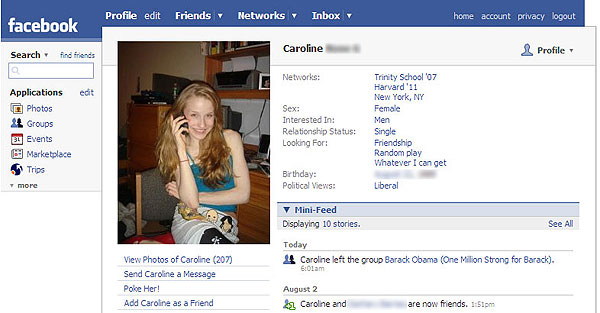
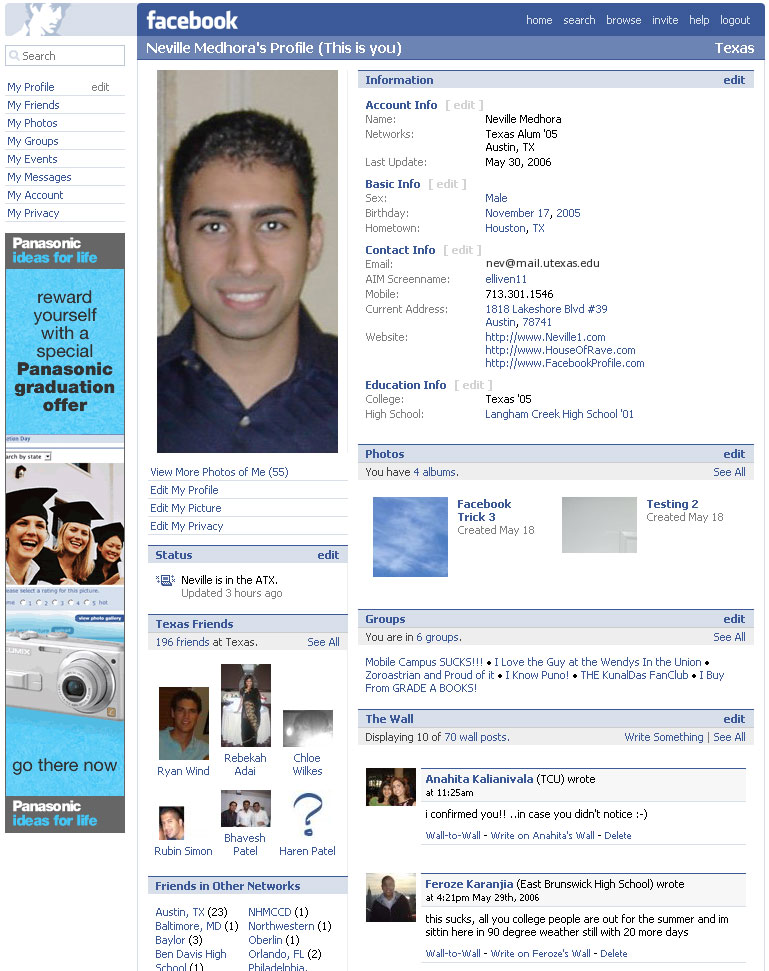
An interesting question. First, the media refers to Facebook as a members-only site, but virtually anyone can join. The site began as an Ivy League social site that expanded across the nation. It now contains people who have not yet attended or simply haven't at all attended college, and has become a general social networking site. The difference? Facebook utilizes a comprehensive set of privacy restrictions to allow the user to tailor how much another person can see of their profile. This can vary -- if you're that person's friend, you may see more information and pictures than someone unrelated just snooping around. Like a reporter.
You can see where I'm going with this. What are the guidelines for using information gleaned from social networking profiles? Should reporters be allowed to use comments, pictures, and personal information that can be found on a person's profile?
After some thought, I think there's a distinction to make. Here's
The Editorialiste's take on the matter.
Social networking sites all have varying degrees of privacy. MySpace is almost all-or-nothing; Facebook is a spectrum of restrictions. So what's a reporter to do, ethically, if he or she can't get in touch with students in Virginia because the phone network is overloaded and e-mail requests aren't being returned?
Tread carefully, that's what.
Members-only or not, if the information is visible to a reporter who is not associated with the person in question (that is, isn't a "friend" or isn't in the same "network"), I believe that reporter may use the information. That means that wall postings, profile pictures, posted personal information, etc. are all fair game.
HOWEVER, if you are in that person's "network," or stronger, are that person's "friend," it is my opinion that that information is privileged information and cannot be used in the public sphere. The privacy settings were set to include you and exclude others, and that digital pact shouldn't be broken.
But isn't a social networking site members-only? How can you advocate using the information at all?
Well, in a case like Facebook, virtually anyone can join if they wanted. So it might be members-only, but it's open to the public. Therefore, any information of a Virginia Tech member that can be seen by a New York, NY reporter is effectively public. It's the same as trolling a MySpace site, even though you don't need to sign up to view public profiles.
But the use of social networking sites poses another problem: what if the profile is
a joke?I know of many people who have false "marriages" with friends on their profiles and purposefully enter false data into their personal information and interests. Some even post false pictures of themselves -- pictures of others but "tagged" as being them. How can a reporter tell fact from fiction? What if the information is false but not obviously outlandish? Sure, the person who made the profile is responsible, but it's the reporter's responsibility to get the facts straight in a story. Do journalists want to straddle that line?
I don't know, and it's a tough call to make by an editor. But I think this conversation is going to crop up in a lot more
newsrooms -- and classrooms -- this year.
UPDATE 11:06 a.m.: Gawker just ran a nice post about how n
ews organizations have been pestering Virginia Tech students for info through social networking sites like LiveJournal and Friendster. "Maybe you can shoot me an e-mail," one says.
ALSO: The New York Times ran a piece today on social networking sites that is sourced almost entirely from
material from the site.
 Some quick thoughts on the breaking news flap about Caroline Giuliani in my last post. CNN recently interviewed the subject of the controversy, Lucy Morrow Caldwell, and in it, it was reported that Facebook canceled her account for the following reason:


![Editorialiste [at] gmail](https://blogger.googleusercontent.com/img/b/R29vZ2xl/AVvXsEjzDvlHqUd5msfCmRq2Q5EZRpn_nbVg33bjiUhLEigM_5fudZhIHvuAVxB4_MS0xn-cQ0EKyjxOua1ysQ4NdMzyvhg1oSVTv6OJAarhVTqG0BBkJKTjqBhwMjrMGOANWxT8l8rKFg/s220/editorialiste_logo.jpg)